Uniforms for a New School: Choosing and Launching Your First
Custom Uniforms team · · 5 min read
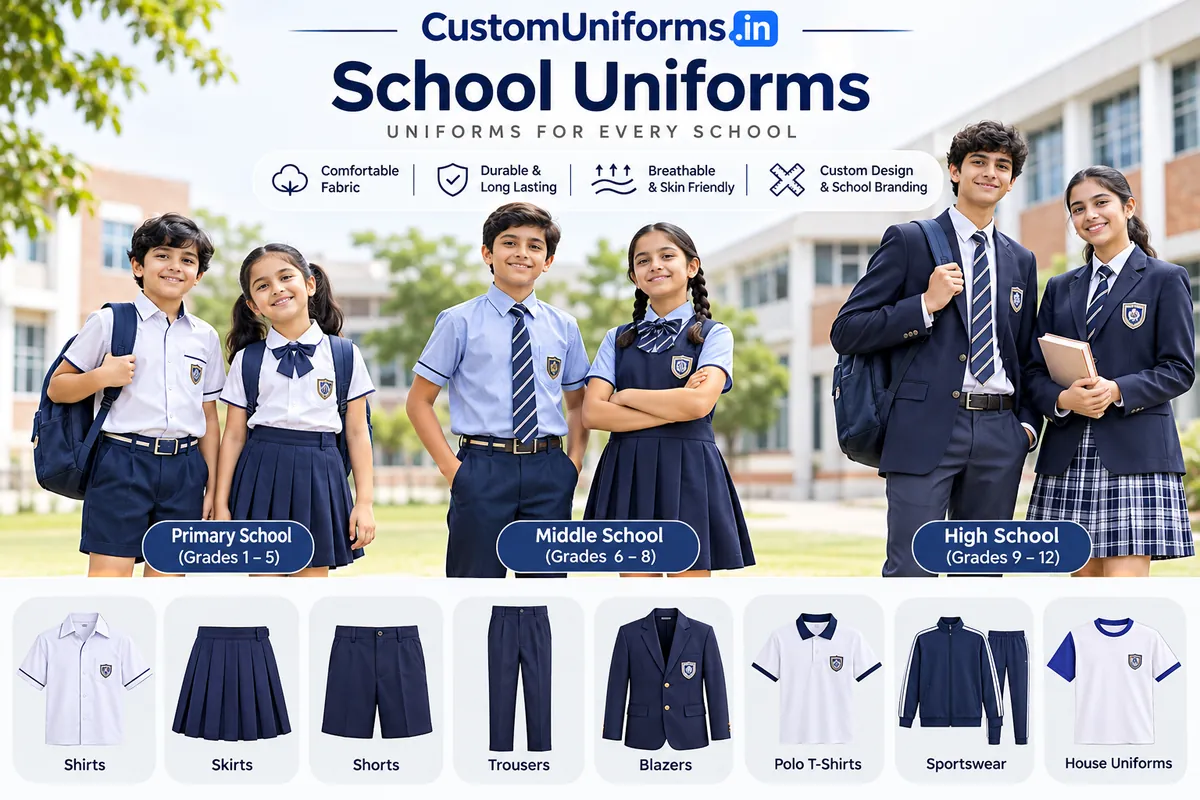
A new school should settle its uniform in a set order: decide the garments for each class, fix the colours and fabric, design the badge, approve a sample, then collect sizes and place the order with enough time to reach parents before the first day. The decisions you make now will be repeated every year, so it pays to keep them simple, easy to reorder and clearly written down. This guide walks through each step for a school opening its doors for the first time.
Why the first uniform matters more than later ones
An established school changing its uniform has a reference garment, a size history and parents who know the routine. A new school has none of these. Every choice, from the shade of the shirt to the position of the badge, becomes the standard that future batches must match. Changing it in the second year means parents buy twice, which is a poor start for a young school.
Treat the first uniform as a specification you will live with for many years, not a one-off purchase.
Step 1: Decide what each class wears
Start with a simple table: classes down the side, garments across the top. A new school often opens with only a few classes, but plan for the full range you expect to run, so the uniform grows naturally as senior classes are added.
Typical choices include:
- Pre-primary (LKG and UKG): shirts with shorts or a pinafore, with elastic waists for easy dressing.
- Primary: shirts with shorts, trousers, skirts or pinafores.
- Middle and senior classes: shirts with trousers, skirts or salwar sets.
- PT days: a t-shirt with track pants or shorts in school colours.
Keep the number of separate garments small. Every extra item adds cost for parents and another thing to match on reorders. Our guide to pinafores, skirts and salwar sets covers the options for girls in more detail, and comfortable and inclusive uniform policies explains how to give students sensible choices.
Step 2: Choose colours you can reorder
A new school is tempted to pick a striking, unusual shade. Unusual colours are harder to source consistently, and a colour that cannot be matched next year becomes a problem. Pick a main colour and one or two supporting colours, then check that the fabric is easy to find in those shades.
For a check pattern, keep the design simple and save a physical sample of the approved fabric. Our post on choosing school uniform colours goes through combinations that work well in Kerala classrooms.
Step 3: Pick fabric for the climate
Kerala schools reopen in the monsoon, and uniforms are washed often and dried slowly in humid weather. Fabric that breathes, dries reasonably quickly and keeps its colour through repeated washing will save parents a lot of trouble. The school uniform fabric guide for the monsoon covers blends, weights and colour choices for wet months.
Ask your supplier to state the fabric composition in the quote, and keep that record with your uniform specification.
Step 4: Design the badge with embroidery in mind
The school logo often comes from a designer who has never worked with thread. Fine lines, tiny text and many colour gradients do not stitch cleanly at pocket size. Simplify the logo for the uniform, keeping the shield or emblem and the school name in a clear shape.
Decide where the badge goes (pocket, chest or sleeve) and whether it is embroidered directly or supplied as a separate woven or embroidered badge. Our school badge embroidery guide explains sizes and placement.
Step 5: Write a one-page uniform specification
Before asking for quotes, put everything on a single page:
- Garments per class, with styles (half or full sleeve, pleated or plain skirt, elastic or belt-loop waist).
- Colours, with a fabric swatch or reference if you have one.
- Fabric type and any preference on composition.
- Badge artwork, size and placement.
- Expected number of students per class, and expected admissions.
- The date uniforms must reach parents.
This page makes quotes comparable and becomes the record for every future order.
Step 6: Approve a sample before bulk production
Ask for a sample set stitched in the actual fabric, with the badge in place. Check colour in daylight, stitching, fit on a child of the right age, and how the fabric feels after a wash. Do not move to bulk production on the strength of a photo. The sample approval checklist for school uniforms lists what to look at.
Step 7: Collect sizes and plan the first order
A new school may not know its final enrolment until close to opening. Collect sizes from admitted students as early as you can, and keep a small number of spares in common sizes for late admissions. Order a separate top-up once admissions settle rather than guessing large quantities upfront. Our guide on collecting student uniform sizes explains how to run this smoothly.
Step 8: Decide how parents will buy
Agree early whether parents buy through the school, through a nominated shop, or both. Tell parents what the uniform includes, how sizes are chosen, and where to buy shoes, socks, ties or belts if your uniform needs them, since those are usually sourced separately.
Common mistakes for new schools
- Choosing a rare shade that cannot be matched next year.
- Too many garments, making the full set expensive for families.
- A detailed logo that stitches poorly at small size.
- Ordering on photos without a physical sample.
- No written record of the approved specification.
Planning the timeline
Work backwards from the opening date. Allow time for quotes, sample stitching, sample approval and size collection before production starts, and leave a margin for corrections. For a June opening in Kerala, start in the months before; our post on when Kerala schools should order uniforms sets out a full calendar.
Start your new school’s uniform with us
We make school uniforms to order at our unit in Konni, Pathanamthitta, Kerala: shirts, trousers and shorts, skirts and pinafores, salwar sets, PT uniforms and house t-shirts, in every size from LKG to Class 12, with school logo embroidery. The minimum order is 30 sets with mixed sizes allowed, which suits a new school with small first classes. We make one paid sample set, and its cost is credited against your bulk order. Production takes 15 to 20 working days after sample approval, and we keep your fabric, colour and size details on record so later orders match.
See our school uniforms page, then send your requirement on WhatsApp or through the quote form.