School Badge Embroidery: Putting Your Logo on Uniforms
Custom Uniforms team · · 4 min read
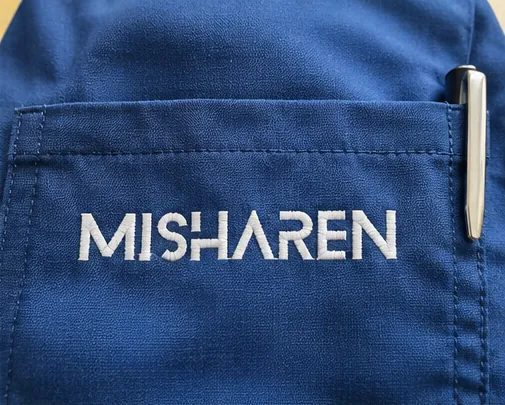
School badge embroidery works well when the artwork is simplified for thread, the badge is sized to suit both the smallest and largest garments, and the position and thread colours are fixed on an approved sample. A school logo on a uniform is seen every day by students, parents and visitors, so it is worth getting right before hundreds of shirts are stitched.
Start with the right artwork
Embroidery machines do not read a logo the way a printer does. The artwork is converted into a stitch file, a process called digitising, which decides where each stitch goes and in what order. The cleaner your artwork, the better the result.
Send your supplier:
- The highest-quality version of the badge you have, ideally the original vector file used by your designer or printer.
- The exact colours, by name or code if you have them.
- The school name and motto exactly as they should appear, typed out, so spelling can be checked.
If all you have is a scanned or photographed badge, say so. It can still be digitised, but expect a few questions about details that are unclear.
Simplify for thread
Many school crests were designed for letterheads, with fine lines, small text and shading. On fabric, at badge size, some of that detail cannot be stitched clearly.
Common simplifications include:
- Reducing small text. A motto in tiny letters around the crest may become unreadable. Consider making it larger, shortening it or leaving it for printed materials only.
- Thickening fine lines. Very thin outlines can look broken or uneven in thread.
- Reducing colours. Each colour is a thread change. Five or six colours is usually manageable; gradients and shading are not.
- Removing tiny details. Small stars, dots or texture inside a shield often blur into a single shape.
Ask your supplier to show you the digitised version, or a stitched test, before approving. The aim is a badge that is clearly recognisable as yours, not a pixel-perfect copy of the letterhead.
School badge size and position
The usual position is the left chest of shirts, PT t-shirts and blazers, or on the pocket. Some schools place it on the pinafore bib or the kameez yoke.
When choosing a size, think across your whole size range. A badge that looks right on a senior shirt may cover half the chest of a pre-primary shirt. Options:
- One badge size that is modest enough for the smallest garments and still readable on the largest.
- Two badge sizes, one for junior sizes and one for senior sizes.
Two sizes usually look better, but they mean two embroidery files to manage. Whatever you choose, record the size and the measured position, for example a set distance down from the shoulder seam and in from the centre front.
| Garment | Common position | Point to check |
|---|---|---|
| Shirt | Left chest or on the pocket | Badge does not sit too low when the shirt is tucked in |
| PT t-shirt | Left chest | Knit fabric does not pucker around the badge |
| Pinafore | Bib, centre or left | Badge clears the strap seams |
| Salwar kameez | Left chest or yoke | Not hidden by the dupatta |
| Sweater or blazer | Left chest | Thread contrast against a darker fabric |
Thread colours against your fabric
A badge that looks perfect on a white shirt may disappear on a navy pinafore or a yellow house t-shirt. Check your badge colours against every fabric it will be stitched on.
If one colour is lost against the fabric, you can add a thin outline in a contrasting thread, or change that element’s colour for that garment only. Agree these variations at the sample stage and record them. If you use house t-shirts, see our house t-shirt colour system guide for how thread colours interact with house colours.
Comfort and durability
Dense embroidery is stiff, and on a child’s shirt it can scratch. A good digitised file balances density with comfort. Ask:
- Is there a soft backing on the inside of the badge?
- Does the badge feel stiff after washing?
- Does the fabric pucker around the edges after a wash?
Wash a sample the way a parent would, at home, and iron it. The badge should lie flat and keep its colours.
Sewn-on badge or direct embroidery
Some schools use separate woven or embroidered patches stitched onto the garment, others have the badge embroidered directly into the fabric. Direct embroidery is neater and cannot be peeled off. Patches can be useful when the same badge must go on many different garments, or when a uniform shop adds badges to plain stock. Discuss which suits your uniforms with your supplier.
How we handle school badge embroidery
We embroider school badges, names and house names onto uniforms made to order at our unit in Konni, Pathanamthitta, Kerala. Send us your badge artwork and we can make a sample garment with the embroidery, so you can check size, position, colours and spelling before bulk production. Any sample charge is in your quote. We keep the embroidery details on record with the fabric, colour and size information so that reorders match. Our sample checklist for school uniforms covers what else to review at that stage.
To start, read how we work with schools or send us your badge artwork.