Local Tailor vs Uniform Manufacturer: An Honest Comparison
Custom Uniforms team · · 5 min read
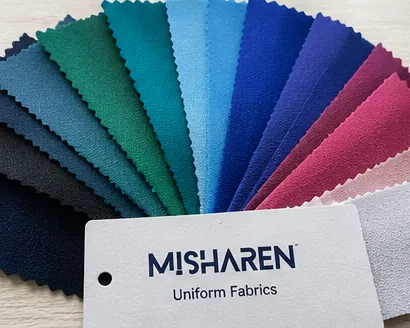
A local tailor is usually the right choice for small numbers, individual fits and quick alterations, while a uniform manufacturer suits orders where many people need identical garments in a matched colour, with logos and reorders that stay the same year after year. Neither is better in every case. The right answer depends on how many uniforms you need, how consistent they must be, and who will manage the order.
What a local tailor does well
Most towns in Kerala have a tailor who has stitched for the local school, clinic or church for years. That relationship has real advantages:
- Individual measurements. A tailor measures each person and cuts for that body. For staff with unusual sizes, or for a doctor who wants a coat that fits exactly, this is hard to beat.
- Very small quantities. Two lab coats for a new clinic, or five uniforms for a small office, are easy for a tailor and below what most manufacturers accept.
- Fittings and alterations. You can walk in, try the garment on and have it taken in the same week.
- Garments outside a manufacturer’s range. Sarees, blazers or special ceremonial wear may be easier to get from a tailor or a specialist shop.
- Local accountability. You know where the shop is, and the tailor knows your institution.
Where a local tailor struggles
The same strengths become limits as the order grows:
- Consistency across many people. Fifty staff measured and cut one by one can end up with small differences in collar shape, pocket position and length. On a ward or in an assembly line, those differences show.
- Fabric matching across batches. A tailor often buys fabric from a local shop roll by roll. The next roll may be a slightly different shade, so new joiners stand out.
- Capacity in busy seasons. Before school reopening in June, many tailors are fully booked. A big order can push out their regular customers, or slip.
- Embroidery. Many tailors do not own an embroidery machine. Logos and names are then sent out, or left off.
- Records for reorders. The specification often lives in the tailor’s memory rather than on paper.
None of this is a criticism of tailors. They are set up for made-to-measure work, not for repeating one specification across hundreds of garments.
What a uniform manufacturer does differently
A manufacturer works from an approved specification instead of individual measurements. The fabric, colour, style, pockets, logo position and size chart are fixed once, a sample is approved, and every garment is cut to that standard size chart. The result is a team that looks the same, and a record that lets the next order match.
The trade-offs are honest ones too:
- Sizes come from a size chart, not a tape on each person. Most people fit a standard size well; a few may need a custom measurement or a small alteration.
- There is a minimum order. Ours is 30 sets, with mixed sizes allowed.
- You plan ahead. A sample is made and approved before bulk production starts.
Our guide on made to order versus ready-made uniforms explains how this differs from buying off the shelf.
Side by side
| Question | Local tailor | Uniform manufacturer |
|---|---|---|
| How many garments? | A handful to a few dozen | From a minimum order upward |
| How is fit decided? | Each person measured | Standard size chart, custom sizes on request |
| Is the colour the same next year? | Depends on the fabric shop | Specification kept on record |
| Logo and names? | Often sent out, if offered | Usually handled in-house |
| Fittings and alterations? | Easy, walk-in | Limited; fit is checked on the sample |
| Planning needed? | Less | Sample approval first, then production |
When a local tailor is the right choice
Choose your tailor when:
- You need fewer garments than a manufacturer’s minimum order, and there is no plan to grow.
- Each person needs an individual fit, for example a senior consultant’s coat or a uniform for someone with a disability that needs adjustments.
- The garment is not something a uniform manufacturer makes, such as a saree uniform.
- You need a one-off replacement or an alteration this week.
When a manufacturer suits better
Choose a manufacturer when:
- More than one department, class or branch must look identical.
- You will add new staff or students through the year and want them to match.
- Logos, names or department text are part of the uniform.
- You want one written specification and a sample approved before money is committed to the full order.
Using both
Many institutions do not need to pick one. Common combinations:
- A hospital orders scrubs, lab coats and support-staff uniforms from a manufacturer, and uses a local tailor for alterations and the occasional individual fit.
- A school orders its main uniform in bulk, and the local tailor handles mid-term hemming for growing children.
- A tailor keeps the customer and the stitching, and sends finished garments to an embroidery unit for logos and names. Our post on embroidery for tailors without a machine explains how that job work runs.
Questions to ask yourself before you decide
- How many people need uniforms now, and how many will join in the next year?
- How visible is a mismatch in colour or style in our setting?
- Do we need a logo or names on every garment?
- Who in our team will manage measurements, sizes and follow-up?
- When do we need the uniforms, and is that a busy season for local tailors?
If the answers point to a larger, repeatable order, read our questions to ask a uniform manufacturer before you request quotes.
Talk to us about your order
We make uniforms to order at our unit in Konni, Pathanamthitta, Kerala: scrubs, lab coats, nurse uniforms and support-staff uniforms for hospitals and clinics, and shirts, trousers, pinafores, salwar sets and PT uniforms for schools. Uniform orders start at 30 sets with mixed sizes allowed, and one paid sample set is made first, with its cost credited against your bulk order. We also do logo and name embroidery in small quantities, including on garments your tailor has stitched.
Send your requirement on WhatsApp or through the quote form, and we will tell you honestly whether it suits us or your local tailor better.