How to Write a Uniform Requirement Brief for an Accurate Quote
Custom Uniforms team · · 5 min read
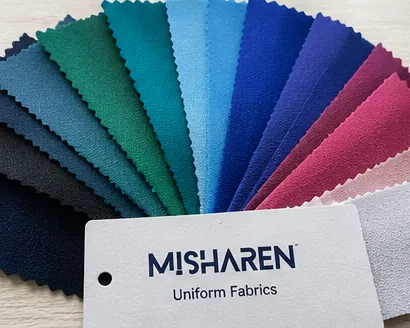
A uniform requirement brief is a short written list of what you need: the garments, how many of each, the sizes, fabric, colours, logo details and the date you need them by. Sending it before you ask for a price lets a manufacturer quote accurately the first time, instead of guessing and revising. It also gives you a fair way to compare quotes, because every supplier is pricing the same thing.
Why a vague enquiry gets a vague quote
“Need uniforms for 40 staff, please send rate” is a common first message. It is a fine start, but a manufacturer cannot price it properly. Forty staff could mean forty scrub sets or a mix of scrubs, lab coats and housekeeping tunics. The fabric could be cotton or a stretch blend. The logo could be one small chest mark or a logo plus every person’s name.
Each of those choices changes the cost and the production time. A brief removes the guesswork, and it saves several rounds of messages for both sides.
What to include
1. Who you are and where you are
Name of the hospital, school, clinic or business, the town or district, and the contact person who will approve the sample. If the uniforms must be delivered to a different address, say so.
2. The garments
List every item separately: scrub top, scrub trousers, lab coat, nurse tunic, school shirt, pinafore, PT t-shirt and so on. For each, note the style if you know it, such as V-neck or round neck, half or full sleeve, number and type of pockets, and drawstring or elastic waist.
If you have a garment you already like, a photo of it (front, back and close-ups of the collar and pockets) is worth a page of description.
3. Quantities
Give the number of each item, and how many sets per person. For example, 25 staff with two scrub sets each is 50 sets. If you expect new staff or admissions during the year, mention it, because it affects how the specification is recorded for reorders.
4. Sizes
The size breakdown is often the last thing buyers collect, but even an estimate helps. If you have it, list the count per size for each item and fit, men’s and women’s separately. If you do not have it yet, say roughly how many men and women, or which classes, and ask for the size chart. Our guides on collecting staff sizes and collecting student sizes explain how.
5. Fabric
Say what matters to you: breathable, easy to iron, holds colour through frequent washing, some stretch for movement. If you already use a fabric you are happy with, send a piece or a clear photo with the care label. You do not need to know fabric names; describing how the uniform will be used is enough for the manufacturer to suggest options.
6. Colours
Name the colour for each item and each department or class group, and send a reference: a garment, a fabric piece or a colour code. Phone photos change colours a lot, so a physical sample is more reliable when matching an existing uniform.
7. Logo and embroidery
- Attach the logo file. A clear PNG, JPG or PDF is enough to start; a vector file is even better.
- Say where it goes on each garment: left chest, pocket, sleeve.
- Say whether names, designations or department names are embroidered, and on which items.
- If names are included, plan to send a list with one row per garment.
Our guide on preparing your logo for embroidery covers file types and simple designs.
8. Deadline and delivery
Give the date the uniforms must be in use, not just “urgent”. Then the manufacturer can tell you whether the sample, approval and production fit before that date. For schools, mention the reopening date.
9. Anything else
Packing by department or class, individual packing per person, your own labels, delivery in batches, or any budget limit you want the quote to respect.
A copy-ready template
Copy this into WhatsApp or an email and fill in each line. Leave a line blank if you are unsure, and say so; the manufacturer can help with those.
UNIFORM REQUIREMENT
Organisation:
Town / district:
Contact person and phone:
Delivery address:

Items (one line each):
- Item, style, sleeve, pockets:
- Item, style, sleeve, pockets:

Quantity per item:
Sets per person:
Size breakdown (or estimate of men / women / classes):

Fabric preference or reference:
Colours (per item / department / class):
Colour reference sent (garment / fabric / code):

Logo file attached (yes / no):
Logo position on each item:
Names or department text (yes / no, which items):

Date needed in use:
Packing instructions:
Other notes:
Mistakes that slow a quote down
- Asking for “your rate” without a garment list. You get a rate for a garment you may not want.
- Sending a logo screenshot from a website. It is often too small and blurry to digitise cleanly.
- Leaving out names. Name embroidery on every garment is extra work that should be in the quote.
- No date. Without one, the manufacturer cannot tell you whether it is possible.
- Different briefs to different suppliers. Then the quotes cannot be compared. Our guide on comparing school uniform quotes shows what to line up.
What happens after you send it
With a clear brief, a manufacturer can send a written quote with fabric options, confirm the size chart, and make a sample for approval. With us, that is one paid sample set, with its cost credited against your bulk order, and production takes 15 to 20 working days after the sample is approved. Uniform orders start at 30 sets, with mixed sizes allowed. Our post on how bulk uniform ordering works walks through each stage.
Send us your brief
Paste the template into WhatsApp or use the quote form, with your logo and any reference garment photos attached. We make uniforms to order at our unit in Konni, Pathanamthitta, Kerala, for hospitals and clinics and schools, and we will reply with any questions before we quote.