Woven Labels vs Printed Labels: Which Suits Your Uniforms?
Custom Uniforms team · · 4 min read
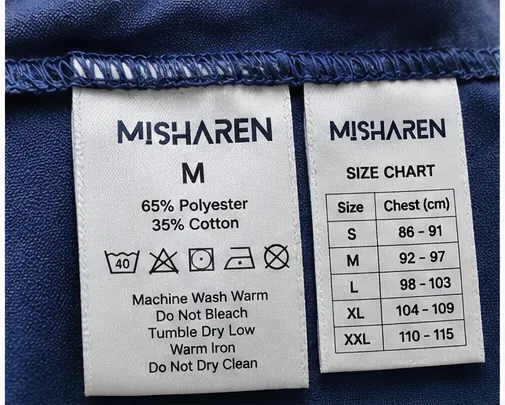
Woven labels are made on a loom, with the text and logo built into the fabric of the label itself. Printed labels have the design printed onto a plain tape, usually satin, polyester or cotton. For most uniform brands the practical answer to woven labels vs printed labels is both: a woven label for the brand name, and printed labels for size and care details.
How each type is made
A woven label is produced like a tiny piece of cloth. Coloured threads are woven together so the logo and lettering are part of the structure. Common weaves include damask (fine threads, crisp detail, a slightly stiff finish), taffeta (thinner and cheaper, less detail) and satin weave (smooth and soft, with a gentle sheen).
A printed label starts as a blank roll of tape. The text is printed on, usually in one or two colours, and the tape is cut to size. Satin and nylon tapes are common for care labels; cotton tape gives a softer, more natural feel.
There is also a third option, heat-transfer printing, where the label details are pressed straight onto the inside of the garment instead of being stitched in. It is popular on t-shirts and sportswear, but it needs its own equipment and is a separate conversation with your maker.
Woven labels vs printed labels at a glance
| Woven label | Printed label | |
|---|---|---|
| Look | Textured, premium, logo stands out | Flat, clean, plain text reads well |
| Detail | Good for logos; very fine lines can blur | Good for small text and long wording |
| Feel against skin | Edges can be firmer, depending on the cut | Usually softer, especially satin or cotton |
| Wash life | Design is part of the weave, so it does not fade off | Print can fade over many hot washes, depending on ink and tape |
| Typical use on uniforms | Brand label at the neck or waist | Size labels, care labels, batch or order details |
Neither is better in every case. The right choice depends on what the label has to do.
Which label for which job
Brand label. This is the label people notice when they pick up a scrub top or a school shirt. A woven label carries a logo well and still looks the same after many washes, which matters for garments that are laundered often. If your logo has very thin lines or tiny text, ask for a proof first, since a loom has limits on fine detail.
Size label. Size labels need to be clear and quick to read, often in a stack of folded garments. A small printed label, or a woven size tab, both work. Some brands add the size to the brand label itself; others keep it separate so one brand label can be used across every size.
Care label. Care labels carry the most text: fibre content, washing temperature, drying and ironing instructions, and sometimes the country of manufacture. Printed satin or polyester tape handles long wording well and stays soft against the skin. The wording on a care label is the brand owner’s responsibility, so check it against the fabric specification and against the labelling rules of the market you sell in. Our guide to care labels for clothing brands covers what to put on one.
Comfort and placement on uniforms
Uniforms are worn for long shifts and long school days, so a scratchy label gets noticed. A few points help:
- Ask for soft edges. Labels cut with a heat knife or folded at the ends are kinder than straight-cut edges.
- Think about where the label sits. A neck label on a scrub top touches the skin all day; a side-seam label on trousers rarely does.
- Keep care labels in the side seam rather than at the neck, where possible.
- Avoid stacking several labels at the same point. Spread brand, size and care labels across different positions if the wearer will feel them.
For school uniforms worn by younger children, softness is worth more than a premium texture. For medical wear, check that labels sit away from areas that rub against equipment or lanyards.
Getting your labels ready for production
Whichever type you choose, labels have to be ready before your garments are stitched. A short checklist:
- Decide the label set. Brand, size, care, and any extra labels such as a batch number or a size-guide tab.
- Prepare artwork. A vector logo file, the exact wording, and the colours you want.
- Confirm sizes and folds. End-fold, centre-fold or loop-fold labels sew in differently, so tell your maker which you have.
- Order enough. Cover every size in the size breakdown, plus some spares for samples and later reorders.
- Agree placement. Write down where each label goes on each style, for example “brand label centre back neck, care label left side seam, 10 cm above hem”.
- Check them on the sample. Labels are part of what you approve, along with fit, fabric and embroidery.
How we handle labels
At our unit in Konni, Kerala, we make uniforms to order and sew in the buyer’s own brand, size and care labels. Tell us at the quote stage what labels you have, which garments they go on and where each one should sit. They are stitched into the pre-production sample first, so you can check position and wording before bulk production starts, and the placement is kept on record for reorders. If you are building a brand, our post on what private label scrubs are explains how the rest of the process works.
To start planning your own-label range, see our private label uniform service or send us your label details for a quote.