Veterinary Uniforms: What Vet Clinics Should Look For
Custom Uniforms team · · 4 min read
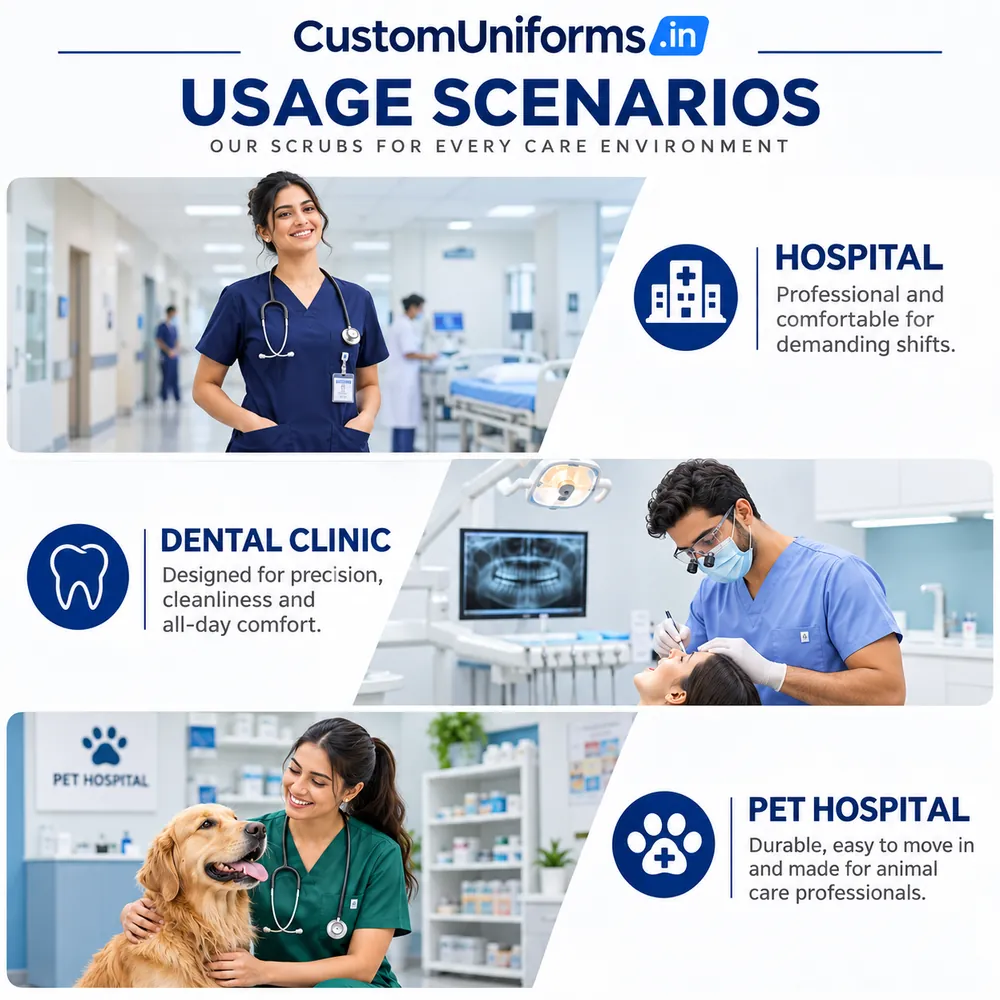
Good veterinary uniforms are tough, easy to clean and simple to move in, because vet work involves kneeling on floors, lifting animals and dealing with fur, mud and worse. Most clinics use scrubs as the core uniform, in mid or deep colours that hide marks, with plenty of secure pockets. Branding and a clear role system then help pet owners know who they are talking to.
How vet work differs from human healthcare
Many of the needs are similar to a hospital: frequent washing, comfort through long shifts and a professional look. But vet teams face a few extra challenges.
- Fur and hair. Some fabrics hold on to animal hair, which then travels home and into the next consultation.
- Physical handling. Staff restrain, lift and carry animals, often at floor level, so garments take more strain at the knees, seat and shoulders.
- Claws and teeth. Loose fabric, dangling drawstrings and thin material can snag or tear.
- Mixed environments. A rural or mixed practice may see small animals in the morning and farm visits in the afternoon.
- Owners in the room. Pet owners are watching closely, often anxious, and the team’s appearance shapes their trust.
Veterinary uniforms by role
Most clinics organise uniforms around a few groups:
- Veterinarians: scrubs, often with a lab coat or smart top for consultations.
- Veterinary nurses and technicians: scrubs in a colour distinct from the vets.
- Groomers: hard-wearing scrubs or a tunic in a fabric that sheds hair easily.
- Reception and client care: a smart top or tunic in clinic colours that looks friendly rather than clinical.
- Kennel and support staff: durable, simple uniforms that can take heavy washing.
Giving each group its own colour, or marking roles through embroidered titles, helps owners understand who is treating their animal and who can answer a billing question.
Fabric that copes with fur and mess
Fabric choice matters more in a vet clinic than in most medical settings. A few general guidelines:
| Need | What tends to help | What to avoid |
|---|---|---|
| Shedding fur | Smooth, tightly woven fabrics | Fluffy or brushed surfaces that trap hair |
| Strength | Twill weaves and medium-weight fabrics | Very lightweight fabric that tears easily |
| Frequent washing | Poly-cotton blends that hold colour | Delicate fabrics that need gentle care |
| Movement | A little stretch in the trousers | Tight cuts with no give at the knee or seat |
Ask any supplier for the fabric composition and weight, and handle the fabric before you decide. Rub a little pet hair on a swatch and see how easily it brushes off. If a fabric is described as having a special finish, such as stain or fluid repellency, ask for the specification in writing and how it performs after repeated washing.
Colour choices
Mid and deep tones, such as navy, charcoal, wine, bottle green or teal, hide marks far better than white or pastels. Some practices like a bright, friendly colour for reception and a darker one for the clinical team.
Think about how fur will show, too. A clinic that sees many white or light-coated animals may find that very dark scrubs show every hair, while a mid-tone hides more. There is no perfect answer, but trying the fabric in your clinic for a few days will tell you a lot.
Pockets and practical features
Vet teams carry a surprising amount: pens, scissors, thermometers, treats, phones, bandage tape. Useful features include:
- Several chest and hip pockets, with at least one that closes securely so items do not fall out when bending over an animal.
- Pockets on the trousers as well as the top.
- Internal or covered drawstrings, or elasticated waists, so nothing dangles for a cat or puppy to grab.
- Reinforced stitching at pocket corners and stress points.
- Short sleeves or sleeves that can be pushed up easily.
Our guide to scrub pockets and features looks at these options in more detail.
Laundry and hygiene
Vet uniforms get dirty quickly, so most staff need more sets than a typical hospital nurse. Follow your clinic’s hygiene policy on where uniforms are washed, and consider whether it is better to launder them on site rather than at home. Shake or brush off loose fur before washing, wash dark colours separately, and avoid over-drying. Our guide on how to wash scrubs so they last has more practical tips.
Protective items such as aprons, gloves and gowns for surgery and isolation should follow your clinic’s safety procedures, and are separate from the everyday uniform.
How we help veterinary clinics
We make veterinary scrubs, lab coats and staff uniforms to order at our unit in Konni, Pathanamthitta, Kerala, in custom colours, fabrics and sizes, with logo and name embroidery for your clinic. Small bulk orders are welcome, with the minimum order confirmed in each quote. We can make a sample before bulk production so your team can try it through a busy week, and any sample charge is stated in the quote. We keep records of each order so reorders match.
To plan uniforms for your practice, see our medical uniforms page or contact us for a quote.