How to Choose Scrub Fabric for Your Hospital or Clinic
Custom Uniforms team · · 5 min read
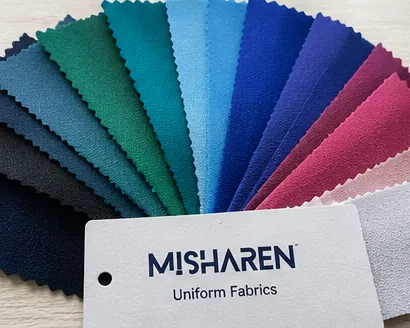
The right scrub fabric is the one that suits your climate, your laundry routine and the work your staff actually do. For most hospitals and clinics in India, the choice comes down to pure cotton, a poly-cotton blend or a blend with some stretch, followed by the weight and colour. Start from how the scrubs will be worn and washed, and the decision becomes much simpler.
Start with how the scrubs will be used
Before comparing fabrics, write down a few facts about the people who will wear them:
- Which departments, and how physical is the work? An OT nurse, a ward attendant and an outpatient receptionist ask very different things of a garment.
- How long is a typical shift, and is the building air-conditioned throughout or only in parts?
- Who washes the scrubs: an in-house laundry with industrial machines, an outsourced laundry, or the staff at home?
- How many sets will each person have, and so how often will each set go through the wash?
These answers matter more than any fabric name. A fabric that feels lovely on the first day but fades after a few months of hot washes is a poor match for a busy hospital laundry.
The main types of scrub fabric
Most scrub fabric falls into one of three families.
| Fabric | Strengths | Things to watch |
|---|---|---|
| 100% cotton | Soft, breathable, comfortable in heat, familiar to staff | Creases easily, may shrink if not pre-treated, colour can fade faster with frequent hot washing |
| Poly-cotton blend | Holds its shape and colour well, creases less, dries faster | Feels less airy than cotton; the higher the polyester share, the warmer it can feel |
| Stretch blend (with spandex or similar) | Freedom of movement, a neater fit, comfortable for active roles | Usually costs more; ask how the stretch holds up after repeated washing |
There is no single right answer. Many hospitals choose a poly-cotton blend for most staff because it copes well with laundering, then pick something softer or with stretch for particular teams.
Fabric weight and weave
Two fabrics with the same blend can feel completely different because of their weight and weave. A lighter fabric feels cooler but may be slightly see-through, especially in pale colours such as white, sky blue or light pink. A heavier fabric is more opaque and hard-wearing, but warmer through a long shift.
Weave matters too. A plain weave is smooth and light. A twill weave, which has a fine diagonal line on the surface, is usually more durable and hides creases a little better. When you compare options, ask to handle the actual fabric rather than relying on a description, and hold pale fabrics up to daylight to check how much shows through.
Climate and comfort
Heat and humidity change the calculation. In a humid climate like Kerala’s, staff notice how well a fabric breathes and how quickly it dries far more than small differences in durability. Cotton-rich blends tend to feel cooler. Fabrics with a high polyester share can feel warm and clammy when the air conditioning is off or patchy.
If your building has a mix of cooled and uncooled areas, ask whether one fabric really suits everyone. A ward attendant moving between corridors and wards may need something different from a theatre team working in a cooled room. Our guide to breathable scrubs for hot climates looks at this in more detail.
Colour and colourfastness
Deep colours such as navy, maroon, bottle green and royal blue wear differently from pale ones. They hide marks better but can fade with frequent hot washing if the dye is not well fixed. Pale colours show stains more readily, though fading is less obvious.
Ask any supplier how the fabric should be washed and whether the colour has been tested for fastness, then follow that advice in your laundry. How scrubs are washed affects their life as much as the fabric itself, which is why we have a separate guide on how to wash scrubs so they last.
A word about special finishes
Some scrub fabrics are sold with finishes described as antimicrobial, fluid-repellent or easy-care. In general terms, these are treatments applied to the fabric to change how it behaves, for example to make liquids bead on the surface or to reduce creasing.
If a finish matters to your organisation, ask the supplier for the fabric specification in writing: what the finish is, how it was tested and how many washes it is expected to last. Do not rely on a swing tag or a sales description, and involve your infection control team in the decision where it is relevant.
A checklist before you decide
- Handle the fabric yourself, and ask two or three staff from different departments to do the same.
- Check opacity in pale colours by holding the fabric up to daylight.
- Ask for the composition (for example, the cotton and polyester split) and the fabric weight.
- Ask how it should be washed, at what temperature, and whether it can be tumble dried.
- Ask about shrinkage and whether the fabric has been pre-treated.
- Have a few people wear a sample through full shifts and put it through your own laundry several times.
- Record the final fabric details, so that future orders use exactly the same material.
How we help you choose
We make scrubs to order at our unit in Konni, Pathanamthitta, Kerala, so the fabric and colour are chosen for your order rather than taken from whatever is on a shelf. We can stitch a sample in your chosen fabric and colour before bulk production, so your staff can wear and wash it first. Any sample charge is stated in the quote. Once you approve, we keep a record of the fabric, colour and style so that reorders match.
To talk through fabric options for your team, see our medical uniforms page or ask us for a quote.